

"If we bring in sponsors, will it hurt our booster club?"
It's a fair concern. Booster clubs are the backbone of most athletic programs, and the last thing any athletic director wants to do is undermine the parents and volunteers who have been showing up for years.
But here's what we've seen working with schools across the country: sponsorship programs and booster clubs are complementary. The athletic departments maximizing funding are the ones using both.
What's the Difference Between a Booster Club and a Sponsorship Program?
The two often get lumped together, but they work in different ways.
A booster club is a volunteer-driven, parent and community-led organization that raises money through events, concessions, spirit wear, and annual fundraisers. The dollars come primarily from families and community members, and the work is done by volunteers.
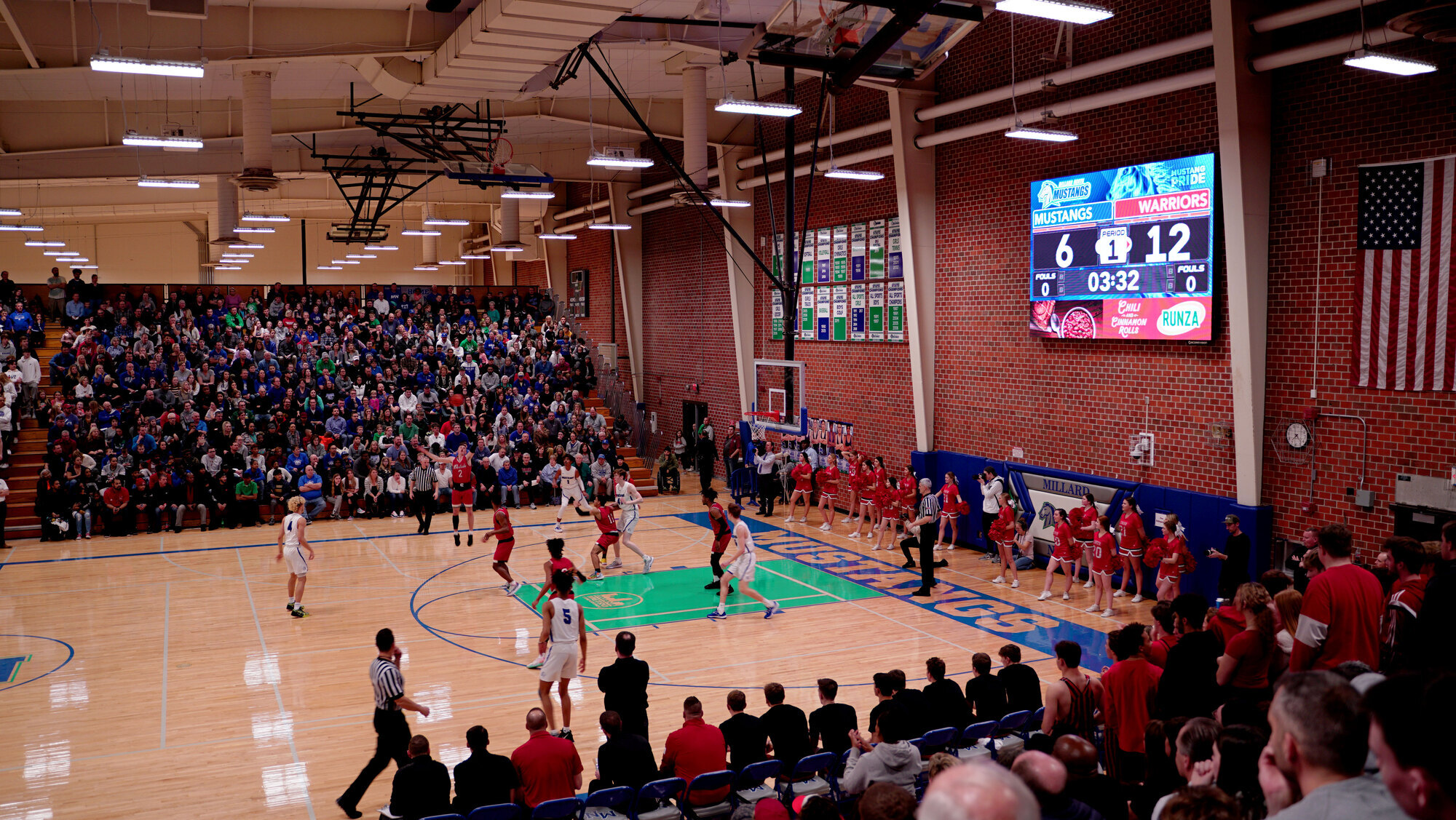
A sponsorship program is a business-driven, professionally managed revenue stream. Local and regional businesses pay for ongoing visibility at games and in your facilities, like scoreboards, scorer's tables, and stadium signage, in exchange for recurring exposure to your community.
Both fund athletics. But they pull from different sources, require different effort, and produce different types of revenue.
Where Booster Clubs Excel
Booster clubs strengthen and run on the relationships between families, students, and the school. That kind of grassroots buy-in is invaluable, and it's something no managed sponsorship program could (or should) try to replace.
Boosters are also incredibly flexible. They can quickly raise funds for the kinds of specific, team-level needs that wouldn't qualify for larger capital budgets, like a uniform upgrade, a travel tournament, new equipment, end-of-season banquets. When a team has an urgent need, boosters can mobilize fast.
They're also a lower-commitment way for community members and local businesses to support the school. A family doesn't need to write a large check to make an impact, they can buy spirit wear, attend a fundraiser, or contribute to a one-time campaign. That accessibility brings more people into the program and keeps the community engaged year over year.
And the numbers reflect how essential this all is.
According to the National Federation of State High School Associations (NFHS), booster clubs contribute as much as 30–50% of an athletic department's budget at many schools (Booster Spark). That's not a small number, and it's exactly why no athletic director should be looking to phase boosters out.
-1.jpg)
Where Booster Clubs Are Limited
Volunteer burnout is real. According to the Center for Effective Philanthropy's 2024 report, 95% of nonprofit leaders see burnout as a major concern in their organization. Booster clubs are no exception. The same group of parents often carries the workload year after year, and when their kids graduate, the institutional knowledge walks out with them.
Revenue is unpredictable. A great fundraiser one year doesn't guarantee anything the next. Every season starts from zero.
Boosters can't easily fund large capital projects. A new scoreboard, video board, or facility upgrade is a heavy lift through event-based fundraising alone, especially when families are already being asked for pay-to-play fees. Roughly 60% of U.S. schools now charge participation fees for sports, which means families are tapped out before booster appeals even begin.
Where Sponsorship Programs Fill the Gap
Sponsorship programs are designed to do what booster clubs can't.
They generate recurring, predictable revenue from local and regional businesses. They fund larger capital improvements, and they don't compete for the same volunteer hours, because there are no volunteers involved.
Just as important: sponsors are looking for something different than what boosters provide. Local businesses want consistent, repeated visibility in their community. They're not looking to be asked for one-time donations every season, they want to be a recognized presence at games year after year.
Sponsorship programs don't replace booster clubs because:
- They pull from different funding sources. Boosters raise from families and community members. Sponsorships raise from local and regional businesses.
- They require different effort. Booster work is volunteer-driven. When managed by a partner like Scoreboard Media, sponsorships require almost no work from your school.
- They produce different revenue types. Boosters generate event-based, often single-purpose funding. Sponsorships generate recurring, multi-season revenue tied to your facilities.
How Sponsorship Programs and Booster Clubs Work Together
In practice, the strongest athletic departments use boosters and sponsors for different jobs.
- Boosters fund team-specific needs, uniforms, travel, equipment, end-of-season events. Sponsorships fund program-wide assets, scoreboards, facility improvements, capital projects.
- Boosters drive community engagement through events that bring families together. Sponsorships drive financial stability between those events, keeping revenue flowing year-round.
- Boosters strengthen relationships with families. Sponsorships strengthen relationships with local businesses.
Both matter. And neither one carries the full weight of funding your program alone.
Scoreboard Media Works Alongside Your Booster Club
This is exactly the model Scoreboard Media is built around.
When we partner with a school, we don't ask boosters to stop what they’re doing. We encourage them to continue their programs, and supplement with ours.
We bring in business dollars that wouldn't have come into your program otherwise, by turning your scoreboards and scorer's tables into revenue-generating assets.
We handle every part of the sponsorship process:
- Sponsor sales and prospecting
- Meetings, contracts, invoicing, and revenue collection
- Graphic design and content execution
- Ongoing sponsor service, renewals, and reporting
Your boosters keep doing what they do best. And your athletic department gets the funding stability to plan ahead instead of starting every season from zero.
-1.jpg)


