

"Where should I actually be spending my ad budget?"
That's a question most small business owners ask themselves regularly, usually right after, "Should I spend on advertising?"
Google Ads is the default answer for most businesses. It’s simple, measurable, a tried-and-true method that appears to be the standard. But it's also one of the most saturated, expensive channels in advertising, making it difficult for small businesses to compete.
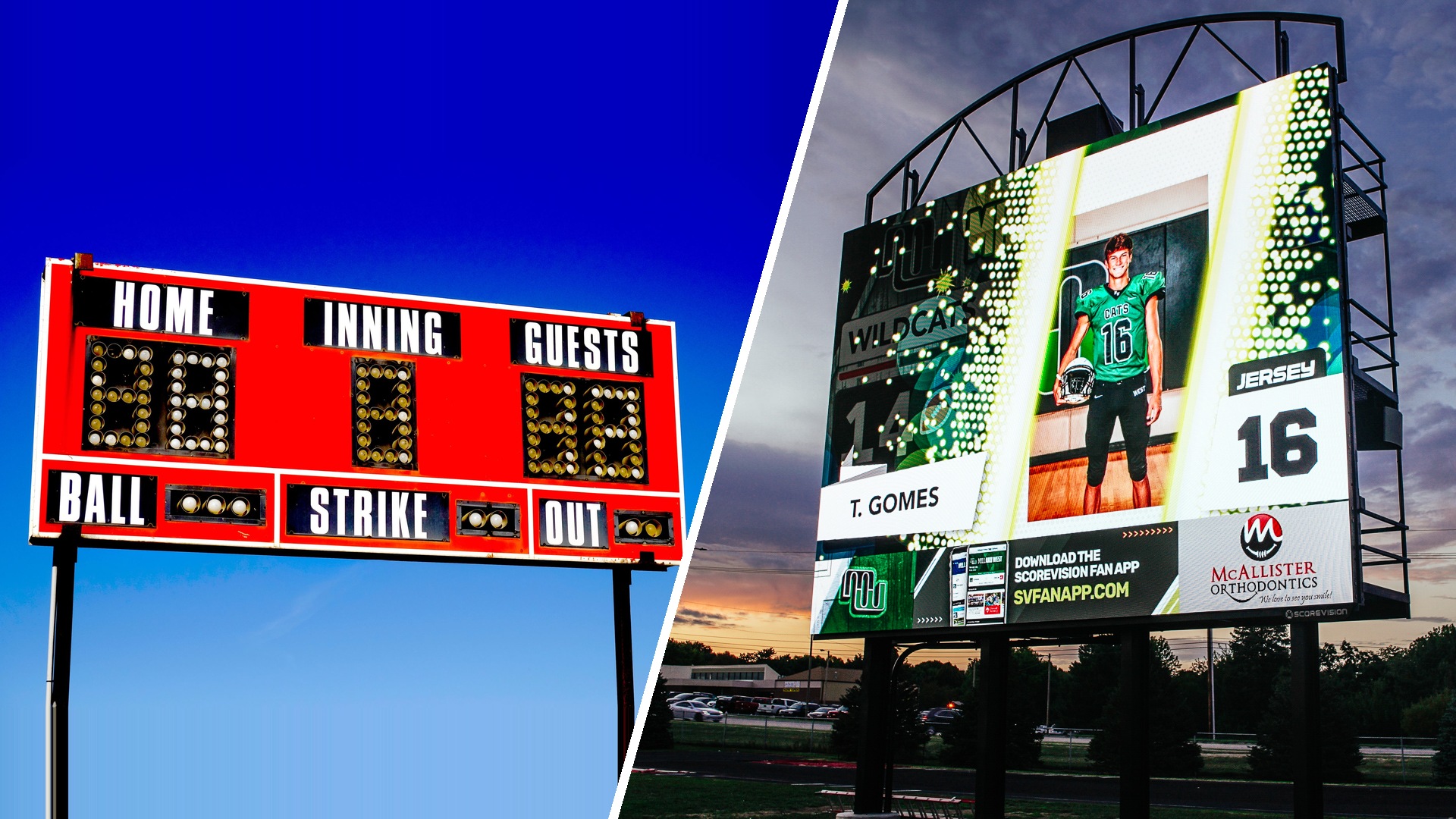
Meanwhile, local sponsorships like high school scoreboard advertising sit in a category most owners haven't seriously considered. It feels unfamiliar, so it gets passed over. But for a growing number of small businesses, it's quietly outperforming the channels they've been pouring money into for years.
So which one is actually worth your money? Let's break down the real ROI of each.

What You're Actually Paying For With Google Ads
Google Ads operates on a simple but increasingly expensive model: you pay per click.
According to WordStream's 2025 Google Ads Benchmarks, the average cost-per-click in 2025 is $5.26, and the average cost-per-lead is $70.11.
That is a 12% increase in CPC and whopping 25% increase in CPL from the previous year!
For competitive local industries, those numbers climb quickly:
- Attorneys & Legal Services: $8.58 average CPC
- Dentists & Dental Services: $7.85 average CPC
- Home & Home Improvement: $7.85 average CPC
Most small businesses spend between $1,000 and $10,000 per month on Google Ads, whereas mid-size companies are spending $7,000 to $30,000+ per month, making it difficult for small companies to win that top ad result slot.
Where Google Ads wins:
- Captures high-intent buyers (people actively searching for what you sell)
- Measurable, trackable, and easy to attribute
- Scalable up or down based on performance
- Effective for businesses with clear, urgent purchase triggers (emergency plumbing, urgent care, immediate service needs)
Where Google Ads gets harder for small businesses:
- Auction-based pricing means you're constantly bidding against bigger competitors
- Costs are rising year over year
- 26% of conversions never get tracked properly, leading to wasted spend
- Once you stop paying, the visibility disappears immediately
- The connection to your community just isn’t there

What You're Actually Paying For With Local Sponsorships
Local sponsorships, specifically high school scoreboard advertising, operate on a fundamentally different model.
With local sponsorships, you're buying something different, a permanent place in your community's awareness. Every season your name is on the scoreboard, you're building recognition that doesn't reset to zero when the campaign ends.
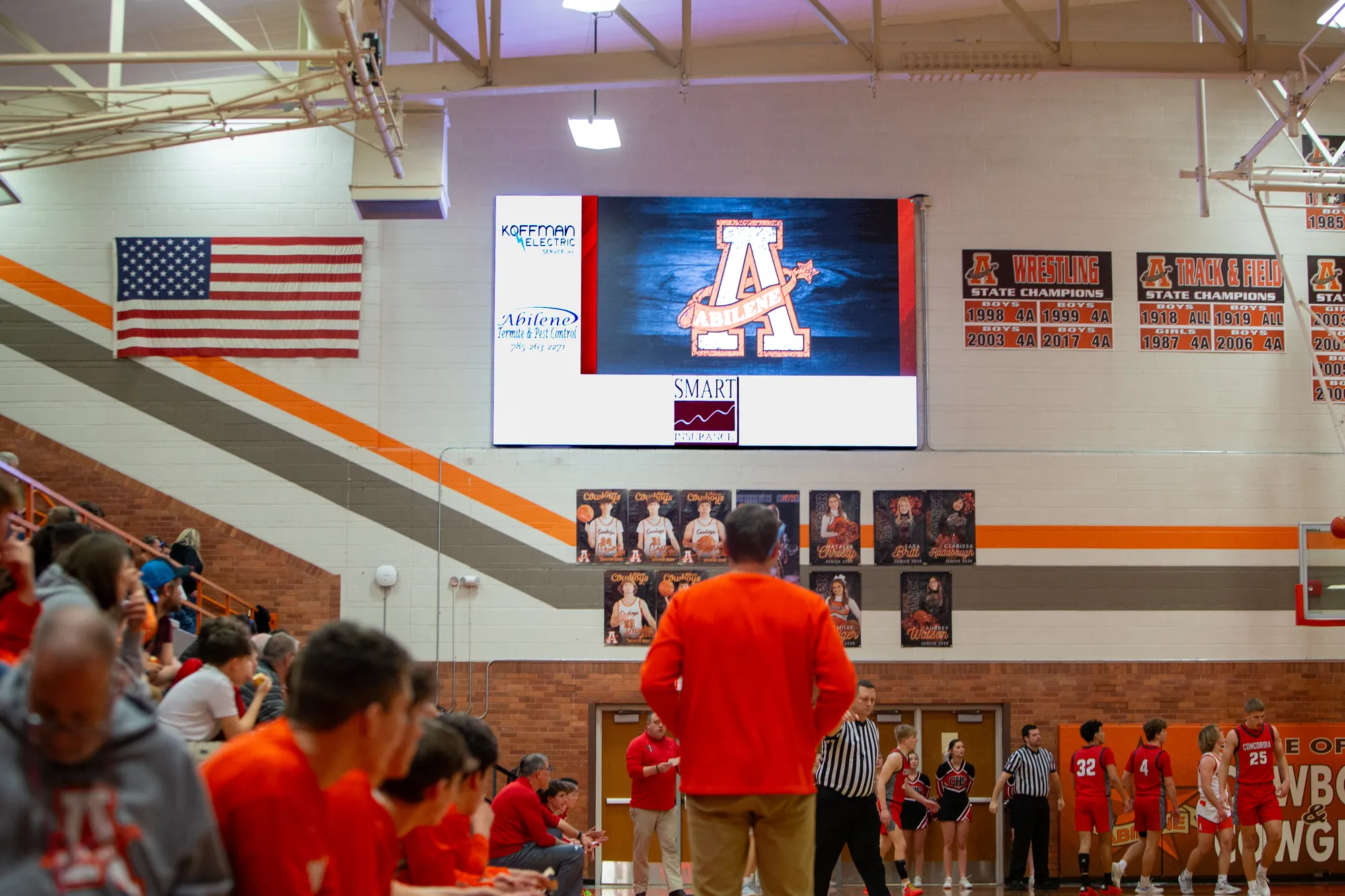
Scoreboard Media partners routinely see over one million local impressions per year at a single school, reaching students, parents, alumni, faculty, and visiting families. That's a year-round, hyperlocal audience that knows who you are and where you operate.
Where local sponsorships win:
- Fixed, predictable cost. No bidding wars, no auction-based pricing that climbs every year.
- Repeated exposure to the same engaged audience. People see your brand 10+ times in a single game, building real recognition.
- An emotionally positive context. Your ad shows up while fans are cheering, not while they're skipping past it on their phone.
- Trust transfer. Supporting the local school positions you as part of the community, not just a vendor.
- Compounding impact. The longer you're there, the stronger your name recognition becomes.
Where local sponsorships are different:
- They don't deliver instant clicks or direct conversions
- ROI shows up as brand recognition, walk-ins, and word-of-mouth
- They work as a brand-building investment, not a direct-response channel
The Honest Truth About ROI Measurement
The reality is that Google Ads and local sponsorships measure ROI in completely different ways.
Google Ads ROI looks like:
- Clicks
- Cost per lead
- Conversion rate
- Return on ad spend (ROAS)
Local sponsorship ROI looks like:
- Brand recall and name recognition over time
- Increased foot traffic and walk-ins
- Word-of-mouth referrals
- Community trust and long-term customer loyalty
- Compounding visibility across multiple seasons
Both are valid. But if you measure local sponsorships by Google Ads metrics, you'll miss what they actually deliver, and vice versa.
According to the Business Dasher, 82% of consumers say they would spend more money to support local businesses they feel are invested in their area. That's the kind of return digital advertising can't manufacture.
.jpg)
Most Small Businesses Are Overspending on Google and Underspending Locally
The default for most small businesses is to put 100% of their ad budget into digital, usually Google Ads and Meta.
That makes sense at first glance because the metrics are clear. But it creates a few problems:
- You're competing against unlimited budgets. National brands can outbid you for every keyword that matters in your industry.
- You're only capturing existing demand. People who don't already know you exist are searching for your bigger competitors by name.
- The minute you stop paying, you disappear. Digital advertising has no compounding effect, every month resets to zero.
Local sponsorships solve all three of those problems, not by replacing Google Ads, but by complementing them.
Where Scoreboard Media Fits
Scoreboard Media connects local and regional businesses with school communities through LED scoreboard advertising at high schools across the country.
When you sponsor with us, you're not just buying ad space. You're getting a partner who handles the parts of advertising small businesses don't have the time or team to do themselves:
- Custom ad design, free of charge. Our in-house team designs your scoreboard ads at no additional cost. No agency fees, no DIY tools, no design skills required.
- Strategy built around your industry. We've worked with restaurants, insurance agents, dealerships, real estate teams, tutoring centers, and more, and we'll help you decide what offers and creative will actually move the needle for your category.
- Ongoing creative rotation. We refresh your ads throughout the season to keep them relevant, your January ad shouldn't be running in April.
- Performance reporting. You see exactly when and where your ads ran, with photos and video proof from the venue.
For small businesses, the value of this channel comes down to three things:
- Fixed, predictable cost. No auction-based pricing. No bidding against national brands. You know your investment up front.
- Hyperlocal reach. A year-round audience of families and community members in the exact market you serve.
- Compounding brand recognition. The longer you're there, the more recognizable you become, and that recognition lifts the performance of every other channel you run.
%2520(1)-1.webp)
-1.jpg)



.jpg)
-1.jpeg)


